
Church to officially take on artistic-director role in November 2026
By Galen Simmons
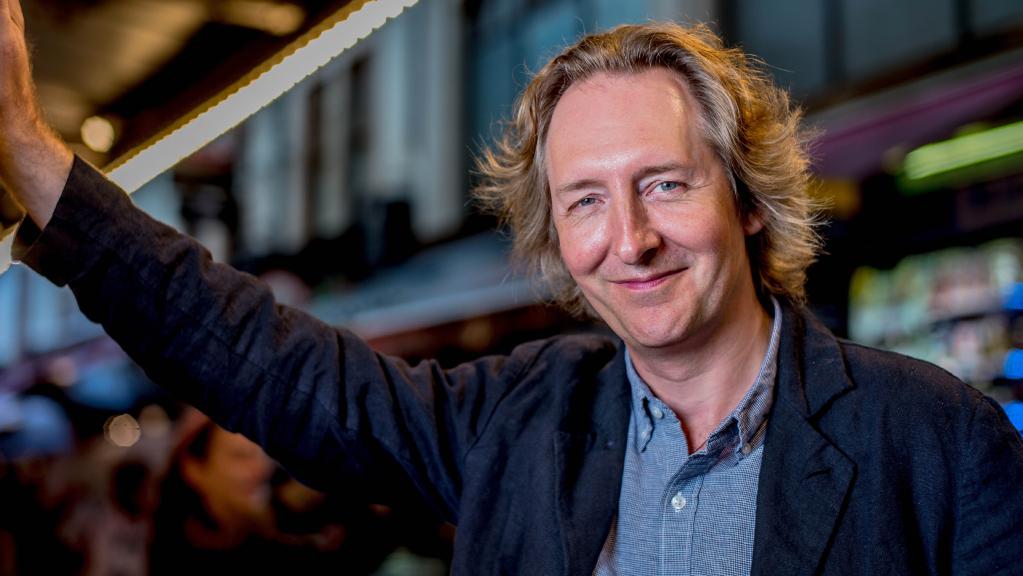
Having just been announced as the Stratford Festival’s next artistic director, Jonathan Church is looking forward to immersing himself fully in the Festival and getting to know its artists and audiences before he officially takes over the role from Antoni Cimolino in November 2026.
Speaking with the Stratford Times just a day after his appointment was announced by the Festival, Church – one of the most respected figures in theatre anywhere in the world – said he is excited to revisit his Canadian roots and carry forward the Stratford Festival’s mission of creating worldclass theatre for both Canadian and international audiences.
“It’s simply one of the greatest theatre festivals and theatre complexes in the world,” Church said of the Stratford Festival. “When the job came up, how could I resist putting my hat in the ring? I’ve run a few companies and, although I currently run an independent theatre company, the thing that I realized I missed … is two things; it’s the sense of family you get working within a building, and that family is both the staff and artists working in the building that you work with year in, year out, and also the connection with the audience.
“I think I discovered that what I missed most – and I sort of knew this when I was running a theatre, but it was only when I didn’t that I recognized what was so powerful about it – is that sense of conversation you have with an audience. And that’s amplified when you have four venues and the number of plays to put on (that the Festival has) because that conversation is very varied, very rich. Over the years, you build artist reputations, you sense what an audience is excited about, you can surprise them, you can introduce them to new things, they can tell you they don’t like things. That conversation, I genuinely felt, is what got me up in the morning for so many years.”
A dual British Canadian citizen, Church has directed more than 50 productions, including repertory, West End, touring and international plays and musicals. His work as a producer and director has netted him 45 Olivier Award nominations and 12 wins, 12 Evening Standard Award nominations and five wins, and six Tony Award nominations.
He has held key leadership roles at major U.K. institutions, including artistic director of the Birmingham Repertory Theatre and the Chichester Festival Theatre, a sister theatre to the Stratford Festival. In his time at Chichester, a total of 48 productions had extended lives through tours and West End runs, including a critically acclaimed production of Macbeth, directed by Rupert Goold and starring Patrick Stewart, which moved to the West End before transferring to BAM in New York and then Broadway.
Church, who is no stranger to the Stratford Festival, having attended regularly since 2008 and directed the 2002 U.K. premiere of Timothy Findley’s Elizabeth Rex, a Stratford Festival commission, says he is excited to take the next step in his career in Canada. Not only does this give him a chance to reconnect to his childhood – part of which he spent in Canada – and his Canadian heritage, it also gives him the opportunity to explore the works of William Shakespeare away from the reputation of the U.K.’s Royal Shakespeare Company (RSC).
“To discover a new set of voices and a different perspective on the world is a challenge, but a great opportunity,” he said. “ … Because we have the RSC in England, a lot of the companies I’ve run have not majored in Shakespeare because we have a national institution that does it, arguably, bigger and better than anybody else. I’ve been fortunate enough to produce and direct some Shakespeare in my time, and the opportunity to work more deeply with him as a writer and that rich set of texts again as an artist and a producer is both a challenge and an exciting opportunity.”
Church said he is equally eager to continue the Stratford Festival’s tradition of fostering the creation of new plays and bringing new works to Stratford that audiences may not have experienced before.
While he said he has only just begun dreaming up what might make up the playbill for his debut season in 2027, he admitted nothing can be set in stone until he meets with the Festival’s creative team and gets a feel for what plays Stratford’s directors, actors and playwrights are most passionate about, and what they believe should be produced for that season. In the meantime, Church said he will use the 2026 season as an opportunity to learn how a season of theatre in Stratford comes together and how it operates, while dipping his toes into that longstanding conversation with Stratford Festival audiences.
“This next set of conversations will, I’m sure, bring me my best ideas,” he said.
While leading the Chichester Festival Theatre, Church was credited with transforming the theatre’s fortunes, nearly doubling its audience and overseeing a £22-million redevelopment, accomplishments that set him up to further the work underway by Cimolino and executive director Anita Gaffney to recover from the pandemic shutdown and its aftermath.
“It’s been one of the great success stories, what Antoni and Anita have achieved, because the growth post-pandemic has been pretty impressive,” he said. “This last season has been incredible and the confidence to extend the season this year, the confidence to bring back a hit like Something Rotten next year; … my job is to keep building on that. There’s lots of strands of how one might continue to do that, but I honestly believe the best thing you can do is create the work that is so in demand and so wanted that you grow the audience. I think that is the most simple way to create additional revenue. We’re in a great revenue place now, but finding some ideas that might do that is a good focus.
“Sometimes that might be about an artist you attract, sometimes it might be about rationalizing a length of run. … One of the successes in other theatres I’ve run, both artistically and for revenue, has been to take work beyond the theatre elsewhere. … If you can create a revenue stream through the brilliant work here being seen elsewhere, wouldn’t that be fantastic? … But you’ve got to make great work in the first place, so that’s got to be the priority.”
Church has been signed for an initial term of five years. He will begin with the Festival initially as artistic director designate as he continues to support projects currently underway with his commercial production company, Jonathan Church Theatre Productions. He officially assumes the role of artistic director on Nov. 1, 2026.
“I’m incredibly proud to be the custodian of (Stratford Festival) theatre,” Church said. “ … An artistic director is here for a relatively brief space of time – Antoni is the exception. If most artistic directors might be here for a decade, then I see the artistic director’s job is to nurture an organization for the people who really own it, and that is the audience, the staff, the sponsors. … If I can pick it up from the amazing place it’s in … not drop the ball and pass the baton to the next person in the future in at least as good, but hopefully better condition, then I’ll have something nice to write on my tombstone.”
 NORTHERN ARTS PERSPECTIVE